
This website is a participant in the Amazon Services LLC Associates Program, an affiliate advertising program designed to provide a means for us to earn fees by linking to Amazon.com and affiliated sites.
An overhead projector cable connects a projector to a laptop, computer, media player, or power source, allowing you to display presentations, videos, and other content on a larger screen. Choosing the right overhead projector cable is essential for achieving a reliable connection, clear picture quality, and uninterrupted presentations.
However, not all projector cables serve the same purpose. HDMI cables transmit digital audio and video, VGA cables support older analog connections, USB-C cables work with compatible modern devices, and power cables supply electricity to the projector.
Whether you are setting up a classroom projector, connecting office presentation equipment, or replacing a damaged cable, understanding the different cable types can save time and prevent compatibility problems.
In this guide, you’ll discover the most common overhead projector cables, how to choose the right one, and how to troubleshoot connection problems.
Best for Projector Connectivity and Reliable Presentations
Anker HDMI Cable (6 ft, 8K)
Best for modern HDMI projector connections
The Anker HDMI Cable supports high-bandwidth digital video connections and offers durable construction. It is a useful choice for compatible projectors and laptops.
Specifications: Up to 8K at 60Hz and 48 Gbps. Anker US+1
Cable Matters USB-C to HDMI Adapter
Best for USB-C laptops and compatible devices

- Important–Check Compatibility Before Purchase: Actual output depends on your laptop and USB-C port. Achieving 8K@60Hz or 4K@240Hz requires a compatible graphics…
- Certified USB-C to HDMI 2.1 Adapter: Upgrade to HDMI 2.1 with this USB C to HDMI adapter with the latest HDMI 2.1 standard with the versatility of USB-C. Supports up…
This adapter connects compatible USB-C devices to HDMI projectors. It supports 4K at 60Hz and is particularly useful for laptops without a dedicated HDMI port.
Requires USB-C DisplayPort Alternate Mode or compatible video output. 4K Ready+1
Amazon Basics VGA to VGA Cable
Best for older projector connections
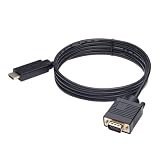
- ONE-WAY TRANSMISSION: This is NOT a bi-directional cable; Transmits signals one-way only from HDMI Source to VGA Display; Does NOT transmit signals from VGA Source…
- IN THE BOX: 6-foot black HDMI to VGA cable, male to male

This VGA cable provides a practical connection for older projectors and computers. Its male-to-male connectors and screw fittings help maintain a secure analog video connection.
A suitable option when both devices have VGA ports. 3M Male to Male+1
Related accessories: HDMI adapters, USB-C hubs, VGA converters, projector extension cables, and compatible replacement power cords.
What Is an Overhead Projector Cable and What Is It Used For?
An overhead projector cable is a connection cable that links a projector to another device or supplies the electricity needed to operate it. Depending on the projector model, it may carry video signals, audio signals, data, or electrical power.
Modern digital projectors commonly use HDMI, VGA, USB-C adapters, and other connection options. Traditional overhead transparency projectors, however, generally use electrical power cords rather than HDMI or VGA cables.
The main purposes of projector cables include:
- Video transmission: HDMI and VGA cables transfer visual information from computers and compatible media devices.
- Audio transmission: HDMI can carry both digital audio and video signals.
- Power supply: Power cords connect compatible projectors to an electrical outlet.
- Device compatibility: Adapters allow certain devices with different ports to communicate.
- Presentation setup: Extension cables provide additional reach between equipment.
For example, a teacher can connect a laptop to a classroom projector using HDMI to display educational slides, videos, and documents.
Similarly, an office employee can use a VGA cable to connect an older computer to a projector that does not have an HDMI input.
It is important to understand that a projector’s connection cable does not automatically improve its resolution. The source device, projector specifications, cable standard, and connection type all influence the final display quality.
Projector cables are also useful in home entertainment systems, conference rooms, training facilities, and educational environments. Choosing the appropriate cable helps reduce connection interruptions and makes projector installation easier.
Important: Always check the projector’s input ports and manufacturer’s specifications before purchasing a replacement cable. A cable that fits physically may not support the signal your equipment requires.
Types of Overhead Projector Cables: HDMI, VGA, USB-C, and Power Cables
Different overhead projector cables serve different purposes, depending on the projector’s age, connection ports, and intended use. Understanding these cable types helps you select the right option for connecting your laptop, desktop computer, or other compatible device.
Here are four common types of projector cables.
HDMI Projector Cable

- Our 4K ultra high speed HDMI cable adopts the most advanced technology, clearly displaying each pixel and accurately processing each signal source. It is also…
- This HDMI cable adopts the latest design style, with upgraded aluminum alloy casing strength and anti bending design at the tail, making it more durable. The plug…
An HDMI (High-Definition Multimedia Interface) cable is one of the most widely used connections for modern digital projectors. It transmits digital video and audio through a single cable, reducing the need for separate audio connections.
HDMI cables are suitable for connecting projectors to:
- Laptop and desktop computers.
- Gaming consoles.
- Streaming media players.
- Blu-ray players.
- Compatible television receivers.
They are available in different specifications, including Standard, High Speed, Premium High Speed, and Ultra High Speed HDMI cables.
For most everyday presentations, a suitable High Speed HDMI cable is sufficient. However, check the projector’s supported resolution and refresh rate before choosing a higher-bandwidth cable.
VGA Projector Cable
VGA (Video Graphics Array) cables are commonly associated with older projectors, desktop computers, and presentation equipment.

- 【Full HD 1080P & Gold-Plated】Supports resolutions at 800×600 (SVGA), 1024×768 (XGA), 1600×1200 (UXGA), 1920x1080P…
- 【Protect Against EMI & RFI】Foil & braid shielding and 100% pure copper cores on the shielded VGA male to male PC cable minimize crosstalk, suppress noise, and…
Unlike HDMI, VGA transmits analog video signals and does not carry audio. Therefore, you may need a separate audio cable when playing videos with sound.
VGA cables are recognizable by their blue or black connectors, which typically contain 15 pins arranged in three rows.
They are useful when:
- Connecting older computers to projectors.
- Using classroom presentation equipment.
- Working with legacy office hardware.
- Connecting devices that do not support HDMI.
However, VGA is an older technology, and its picture quality can be affected by cable length, interference, and signal quality.
USB-C to HDMI Projector Cable
USB-C to HDMI cables and adapters are useful for connecting newer laptops, tablets, and compatible smartphones to projectors with HDMI inputs.

- 【4K UHD Visual Feast】This USB-C to HDMI cable supports up to 4K@60Hz resolution and is backward compatible with 1440P@60Hz and 1080P@120Hz. It can seamlessly…
- 【Plug-and-Play Simplicity】This Thunderbolt 3 to HDMI connects from your Type-C phone, tablet, laptop, and desktop computer to larger displays like monitor, TV…
Many modern devices have USB-C ports instead of traditional HDMI connections. A compatible USB-C to HDMI adapter makes it possible to transmit video to a projector without replacing the projector itself.
Before purchasing one, confirm that your device supports video output through USB-C. Not every USB-C port supports DisplayPort Alternate Mode or another compatible video-output standard.
Some USB-C adapters also support 4K video, making them useful for compatible high-resolution displays.
Projector Power Cable
A projector power cable supplies electricity to the projector, allowing its internal components and lighting system to operate.
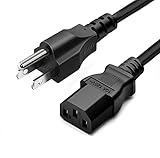
- LENGHT: Use this versatile 5ft (1.5m) power cable to reach your gear & deliver safe reliable power Perfect for Monitors computers and other gadgets
- STURDY AND FLEXIBLE: Features a fully molded design that provides maximum durability and long life.
Unlike HDMI and VGA cables, a power cable does not transmit presentation content. It connects the projector to a compatible electrical outlet or power source.
Common replacement power cables include IEC C13 cables and manufacturer-specific power cords.
When replacing a projector power cable, check the connector type, electrical rating, and manufacturer’s recommendations. Never assume that two cables are interchangeable simply because their connectors look similar.
Quick comparison of projector cable types
| Cable type | Main purpose | Audio support |
|---|---|---|
| HDMI | Digital video and audio | Yes |
| VGA | Analog video | No |
| USB-C to HDMI | Digital video through compatible USB-C devices | Yes, when supported |
| Power cable | Supplies electricity | Not applicable |
Key takeaway: HDMI is generally the most convenient choice for modern digital projector connections, VGA remains useful for older equipment, USB-C adapters support compatible newer devices, and power cables keep the projector running.
How to Choose the Right Overhead Projector Cable for Your Device
Choosing the right overhead projector cable depends on your projector’s connection ports, the device you want to connect, and the quality of the display you need. Before purchasing a cable, identify the available ports on both devices to avoid compatibility problems.
Here are the most important factors to consider.
Check Your Projector’s Input Ports
Start by examining the back or side panel of your projector. Look for HDMI, VGA, USB-C, or other supported connection ports.
If your projector has an HDMI input, an HDMI cable is usually the simplest option for connecting modern laptops and media players.
For older projectors with VGA inputs, you may need a VGA cable or a compatible digital-to-analog converter.
Identify Your Source Device
Your laptop, desktop computer, or smartphone determines which cable or adapter you need.
For example:
- HDMI laptop to HDMI projector: Use an HDMI cable.
- USB-C laptop to HDMI projector: Use a compatible USB-C to HDMI adapter.
- VGA computer to VGA projector: Use a VGA cable.
- HDMI computer to VGA projector: Use an active HDMI-to-VGA converter.
Consider Cable Length
Cable length matters when setting up projectors in classrooms, conference rooms, or home theaters.
A short cable may work for a desk setup, while longer installations may require an extension or a suitable active cable. Longer HDMI runs may need an active HDMI cable or HDMI extender to maintain reliable signal transmission.
Check Resolution and Compatibility
Choose a cable that supports the resolution and refresh rate your equipment requires. For example, a projector supporting 1080p does not need an expensive 8K cable to display ordinary presentations.
Finally, check connector quality, manufacturer recommendations, and electrical specifications when purchasing replacement cables.
Practical tip: Take pictures of your projector’s connection ports before shopping. This makes it easier to identify the correct cable or adapter.
How to Connect an Overhead Projector Cable to a Laptop or Computer
Connecting an overhead projector cable to a laptop or computer is usually straightforward once you identify the correct connection ports. The process may vary depending on whether you are using HDMI, VGA, or a USB-C adapter.
Follow these steps to establish a reliable connection.
Step 1: Turn Off Your Equipment
Before connecting cables, check the manufacturer’s instructions. If possible, turn off the projector and prepare your laptop or computer.
Make sure the projector is positioned correctly and has access to a suitable power outlet.
Step 2: Identify the Available Ports
Examine your laptop and projector to determine which connection types they support.
Common options include:
- HDMI ports for digital audio and video.
- VGA ports for analog video.
- USB-C ports for compatible video output.
- DisplayPort connections on some computers and projectors.
If the devices have different ports, you may need a compatible adapter.
Step 3: Connect the Appropriate Cable
Insert one end of the cable into the laptop and the other into the projector.
For example, connect an HDMI cable between the laptop’s HDMI output and the projector’s HDMI input. If you are using USB-C, connect a compatible adapter to the laptop before attaching the HDMI cable.
Avoid forcing connectors into ports because this can damage the equipment.
Step 4: Select the Correct Projector Input
Turn on the projector and use its remote control or control panel to select the correct input source.
For example, select HDMI 1 if your cable is connected to the projector’s HDMI 1 port.
Step 5: Adjust Your Computer Display Settings
On Windows, press Windows + P to open the projection settings.
You can choose:
- Duplicate: Displays the same content on both screens.
- Extend: Uses the projector as an additional display.
- Second screen only: Displays content on the projector.
On macOS, open System Settings and select Displays to configure the external screen.
Step 6: Test the Connection
Open a presentation, photograph, or video to confirm that the projector displays the content correctly.
If there is no picture, check the input selection, cable connections, and display settings before replacing the cable.
Common Overhead Projector Cable Problems and How to Fix Them
Overhead projector cable problems can interrupt presentations, classroom lessons, and entertainment activities. Fortunately, many connection issues can be resolved by checking the cable, adjusting display settings, or selecting the correct input source.
Here are some common problems and practical troubleshooting tips.
Projector Not Detecting the Laptop
If your projector displays a no-signal message, it may not be receiving a video signal from your laptop.
How to fix it:
- Check that both cable ends are firmly connected.
- Select the correct HDMI or VGA input on the projector.
- Restart the laptop and projector.
- Check your computer’s external display settings.
- Test another compatible cable if necessary.
Flickering or Interrupted Display
A projector screen that flickers or repeatedly loses its picture may indicate a loose connection, damaged cable, or signal transmission problem.
How to fix it:
- Inspect the cable for visible damage.
- Disconnect and reconnect both ends.
- Avoid placing cables near sources of electrical interference.
- Try a shorter, compatible cable.
- Check whether an HDMI extender or adapter is causing the problem.
No Sound Through the Projector
If your projector displays video without audio, check whether your connection supports sound.
HDMI can transmit audio and video, while VGA carries video only.
How to fix it:
- Select the projector as the audio output device.
- Check your computer’s volume settings.
- Confirm that the projector has built-in speakers or an audio output.
- Use a separate audio cable or external speakers when necessary.
Loose or Damaged Projector Cable
Damaged connectors, bent pins, and worn cable insulation can cause unreliable connections.
Replace damaged cables with compatible alternatives rather than attempting to use faulty connections.
Safety tip: Never handle exposed electrical wiring or attempt to repair a damaged power cord yourself. Use a properly rated replacement or seek qualified assistance.
Conclusion
Choosing the right overhead projector cable makes connecting laptops, computers, and other devices easier and more reliable. HDMI cables are convenient for modern digital connections, VGA cables remain useful for older equipment, USB-C adapters support compatible newer devices, and power cables supply electricity to the projector.
Before purchasing a replacement, check your projector’s input ports, device compatibility, cable length, and supported resolution. Additionally, inspect connections and troubleshoot common problems to maintain a dependable presentation setup.
With the right overhead projector cable, you can enjoy smoother presentations, clearer displays, and fewer connection interruptions.
Frequently Asked Questions About Overhead Projector Cable
What cable do I need to connect my laptop to an overhead projector?
You typically need an HDMI cable if both devices have HDMI ports. If your laptop has USB-C and your projector has HDMI, use a compatible USB-C to HDMI adapter.
Can I use an HDMI cable with an old overhead projector?
Only if the projector has an HDMI input. Older projectors with VGA connections require a compatible VGA cable or an appropriate active HDMI-to-VGA converter.
What is the difference between HDMI and VGA projector cables?
HDMI transmits digital video and audio through one cable, while VGA transmits analog video without audio. HDMI is generally more convenient for modern equipment.
How long can an overhead projector cable be?
Cable length depends on its type and specifications. Longer HDMI connections may require active cables or signal extenders to maintain reliable transmission.
Can a USB cable connect a laptop to a projector?
Some projectors support USB display connections, but an ordinary USB cable does not automatically transmit video. Check the projector and laptop specifications before purchasing one.
Why does my projector say no signal?
Common causes include loose cables, incorrect input selection, incompatible adapters, and incorrect computer display settings. Check these issues before replacing your cable.
Where can I buy an overhead projector replacement cable?
You can find compatible projector cables through electronics retailers, computer accessory shops, and online marketplaces. Check the connector type and electrical specifications before ordering.
This website is a participant in the Amazon Services LLC Associates Program, an affiliate advertising program designed to provide a means for us to earn fees by linking to Amazon.com and affiliated sites.