
This website is a participant in the Amazon Services LLC Associates Program, an affiliate advertising program designed to provide a means for us to earn fees by linking to Amazon.com and affiliated sites.
A stick on projector mount is a mounting solution designed to attach a projector or projector accessory to a surface without conventional drilling, screws, or permanent modifications. While adhesive mounts may seem convenient for renters, small rooms, desks, and temporary setups, most standard projectors are too heavy to be safely supported by ordinary adhesive strips or sticky pads.
Choosing the right mounting method depends on the projector’s weight, its mounting design, the surface material, and whether the installation needs to be temporary or permanent. A poorly secured projector can fall, damaging the equipment or causing injury.
In this guide, we’ll explore stick-on projector mounting ideas, no-drill alternatives, what adhesive mounting solutions are suitable for, and how to choose a more reliable setup for bedrooms, offices, apartments, and home theaters.
Best for No-Drill Projector Mounting and Flexible Projector Placement
These three products are worth considering if you’re looking for alternatives to a stick-on projector mount. They offer different approaches to projector positioning without relying on ordinary adhesive to support a projector overhead.
WALI Universal Projector Ceiling Mount
Best for secure fixed mounting

- Universal Compatibility: Fits most projectors (Note: Length <13.7”, Width <8.6”) with standard mounting interfaces. Projector Wall Mount supports a maximum…
- Flexible Adjustment: Enables multi-dimensional adjustment of height and angle based on usage scenarios. Projector Ceiling Mount adapts to different room layouts…
A dedicated projector mount is designed for compatible mounting points and more dependable support. It is a better choice for long-term positioning than improvised sticky attachments.
Mount-It! Universal Projector Mount
Best for adjustable positioning

- 3-in-1 Versatile Installation: Use this universal projector mount for flush ceiling mount, telescoping arm ceiling mount, and wall mount configurations. Compatible…
- Adjustable Extension Arm: Extends from 13.5″ to 22.5″ (wall-mounted) and 4.5″ to 25.5″ (ceiling-mounted), ensuring precise projector placement for optimal screen…
Its adjustable mounting design makes it useful for compatible projector setups that require flexible positioning. It is worth considering when alignment and a dedicated mounting connection matter.
Best for temporary projector placement

- 【Lightweight and Portable】4 section leg can adjust tripod height from 20.4”/52cm to 64.1”/163cm; it can be folded to 15.5”/39.5cm to make it easy to put it in…
- 【360 Degree Ball Head】36mm ball head can be rotated to any angle you want, helping to improve the range of camera activity during panning. It can withstand up to…
A tripod-style stand offers a portable alternative to wall adhesives. It can be useful for temporary movie nights, presentations, or flexible viewing arrangements without attaching the projector to a ceiling.
Always check the exact product model, weight capacity, mounting compatibility, and stability requirements before selecting a mount or stand.
What Is a Stick On Projector Mount and How Does It Work?
A stick on projector mount is a mounting accessory or adhesive-based attachment designed to hold or position a projector without using traditional screws, bolts, or drilling holes into walls and ceilings. These mounts are often marketed as convenient solutions for people who want a simple installation, especially in rented homes, bedrooms, offices, or spaces where permanent modifications are not permitted.
Unlike conventional projector mounts that attach to structural surfaces using mechanical fasteners, stick-on mounting solutions rely on adhesive materials to bond with a surface. However, not every adhesive mount is designed to carry the weight of an actual projector. Many are intended for lightweight accessories, small cameras, cable organizers, or mini projector components rather than full-size projection equipment.
How does a stick-on projector mount work?
Depending on its design, an adhesive mount may use:
- Double-sided adhesive pads: Sticky pads that bond the mounting plate to a smooth surface.
- Heavy-duty adhesive strips: Removable or semi-permanent strips designed for specific weight limits and surface types.
- Adhesive mounting plates: Flat plates that provide an attachment point for compatible lightweight devices.
- Adhesive brackets: Small brackets designed to hold accessories or certain lightweight devices.
The effectiveness of an adhesive attachment depends on surface cleanliness, material compatibility, temperature, humidity, adhesive quality, and the amount of weight being supported.
Why are stick-on projector mounts popular?
People are attracted to adhesive mounting because it appears to offer a quick, convenient way to position a projector without drilling holes or purchasing complicated hardware. It may also seem easier to remove when rearranging a room.
However, convenience should not be confused with load-bearing reliability. A projector suspended above a bed, couch, desk, or walkway requires a properly rated mounting system. Adhesive failure can cause the equipment to fall unexpectedly, so ordinary sticky pads should not be relied upon for overhead projector mounting.
For most users, adhesive solutions are better suited to managing cables, attaching lightweight accessories, or organizing a projector setup, while the projector itself should be positioned using a stable, appropriately rated support.
Can You Mount a Projector Using Adhesive or Sticky Pads?
Yes, adhesive mounting products can attach certain lightweight devices to walls and other surfaces, but using adhesive alone to support a projector is generally not recommended. Projectors vary significantly in weight, shape, ventilation requirements, and mounting design, making it difficult for ordinary sticky pads to provide dependable support.
The biggest concern is not whether an adhesive initially sticks. It is whether the bond remains reliable over time as temperatures change, dust accumulates, humidity fluctuates, and the adhesive gradually weakens. A projector that appears secure during installation may become unstable later.
Why ordinary sticky pads may not be suitable
Adhesive mounting products are usually designed around specific conditions and load limits. A projector can place uneven stress on an adhesive surface, especially when its weight extends away from the wall rather than sitting flat against it.
Potential problems include:
- Weight limitations: The projector may exceed the adhesive’s rated capacity.
- Heat exposure: Warm air from the projector may affect nearby adhesive materials.
- Surface compatibility: Painted walls, textured surfaces, wallpaper, and dusty ceilings may prevent a reliable bond.
- Uneven loading: The projector’s shape may create leverage that places more stress on the adhesive.
- Long-term weakening: Adhesives may deteriorate over time, even if they initially feel secure.
Where adhesive mounting products are more useful
Adhesive solutions can be useful for supporting lightweight accessories associated with a projector setup, such as cable clips, remote-control holders, small organizers, and certain accessory brackets.
For the projector itself, a desk, shelf, floor stand, or properly rated mechanical mount offers a more dependable support option.
If you’re considering an adhesive product, read the manufacturer’s instructions carefully and never assume that a weight rating for a flat, static object applies to a projector mounted overhead.
Safety takeaway: Avoid suspending a projector over people using adhesive-only mounting. A stable support system designed for the projector’s weight and mounting requirements is a much safer choice.
Best Alternatives to a Stick On Projector Mount
If a stick on projector mount isn’t strong or reliable enough for your setup, several alternatives can help you position your projector without depending on adhesive to hold its weight. The best option depends on your room layout, projector size, viewing distance, and whether you need a permanent or temporary installation.
For renters, students, and people who frequently rearrange their rooms, portable mounting solutions are particularly useful because they avoid unnecessary wall modifications.
Projector tripod stand
A projector tripod stand is a practical alternative for temporary viewing setups. It provides a freestanding support option and can be moved between rooms when needed.
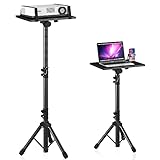
- 【𝑼𝒑𝒈𝒓𝒂𝒅𝒆𝒅 𝑷𝒓𝒐𝒕𝒆𝒄𝒕𝒊𝒐𝒏 𝑫𝒆𝒗𝒊𝒄𝒆】: Projector Stands add a safety latch, which avoids the…
- 【𝑺𝒊𝒎𝒑𝒍𝒆 𝑰𝒏𝒔𝒕𝒂𝒍𝒍𝒂𝒕𝒊𝒐𝒏 & 𝑺𝒕𝒂𝒃𝒍𝒆】: It may take you 5-10 min to install according to attached…
Tripod stands are particularly useful for portable mini projectors, movie nights, presentations, and people who do not want to attach anything to their walls. Choose a stand specifically rated for your projector and ensure it remains stable on a level surface.
Projector shelf
A projector shelf provides a solid platform without requiring an adhesive mount. Depending on the design, the shelf can be installed using appropriate hardware or placed on an existing piece of furniture.

- Fit for projectors below 11.7*7.87 inch. Max Load reach up 10lb.
- Away from the room looks tacky. This wall mount don’t need long pole and extension cord, keep room pretty.
This option is useful when the projector needs to remain in a consistent position. Make sure the shelf is stable, supports the projector’s weight, and allows adequate ventilation.
Dedicated ceiling projector mount
A dedicated ceiling mount is ideal for permanent home theater installations. It provides a more secure attachment than adhesive solutions when installed with compatible hardware into an appropriate structural support.

- Compatibility Note: Not compatible with Aurzen D1 MAX projector model
- Wide Projector Compatibility: Compatible with projectors from Aurzen, TMY, HAPPRUN, Yaber, Epson, and most other brands. Only for projectors featuring a centered…
It is especially useful for larger projectors, fixed screens, and rooms where the projector needs to remain aligned with the viewing area.
Projector table or cabinet
An existing table, cabinet, or sturdy media console may be the simplest solution. It avoids wall modifications and makes it easy to adjust the projector’s position whenever you change your viewing arrangement.
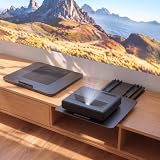
- 【Max 150″ Cinematic Projection】 Extend your TV cabinet depth by up to 9.84 inches (25 cm) with a smooth sliding motion. Effortlessly achieve a massive…
- 【Precision Memory Position System】 Features an innovative memory positioning system with a precision locking screw. Simply calibrate your projection distance…
Before using furniture, confirm that the surface is stable, spacious enough for the projector, and positioned where people will not accidentally bump it.
| Mounting alternative | Best use | Main advantage |
|---|---|---|
| Tripod stand | Temporary viewing | Portable and adjustable |
| Projector shelf | Semi-permanent setup | Dedicated platform |
| Ceiling mount | Permanent home theater | Stable fixed positioning |
| Table or cabinet | Bedrooms and living rooms | Easy repositioning |
Bottom line: If you want the convenience of a stick-on projector mount without risking your projector, a stable tripod stand or existing furniture is usually the most practical no-drill alternative.
How to Choose the Right Mounting Solution for Your Projector
Choosing the right mounting solution is more important than finding a mount that simply sticks to a wall. Your projector’s weight, dimensions, mounting compatibility, ventilation needs, and room layout all determine which option will work reliably.
Before purchasing a stick on projector mount or alternative support, consider how you plan to use your projector and whether you need a temporary arrangement or a permanent installation.
Factors to consider before choosing a projector mount
Projector weight
Check your projector’s weight in its official specifications. Lightweight mini projectors and larger home theater projectors have very different support requirements, so never assume a mount is suitable simply because it looks sturdy.
Mounting compatibility
Some projectors have threaded mounting holes on the bottom, while others are designed to sit on a flat surface. Make sure the mounting solution is compatible with the projector’s intended mounting method.
Surface type
Walls and ceilings can have different materials, finishes, and structural properties. Painted drywall, concrete, wood, wallpaper, and textured surfaces all behave differently when mounting hardware is attached.
Adjustability
An adjustable mount makes it easier to position the projector toward the screen. Look for a support system that offers the flexibility your setup requires without compromising stability.
Ventilation
Projectors generate heat during operation. Avoid mounting solutions that block ventilation openings or place the projector in an enclosed space where heat can accumulate.
Which mounting option should you choose?
| Your situation | Recommended solution |
|---|---|
| Renting an apartment | Table, cabinet, or freestanding tripod |
| Small bedroom | Sturdy bedside table or projector stand |
| Home theater | Professionally installed compatible ceiling mount |
| Frequent repositioning | Portable tripod stand |
| No mounting holes | Flat stable platform compatible with projector design |
| Lightweight accessories | Appropriate adhesive accessory holders |
The best mounting solution should provide dependable support, convenient positioning, and enough clearance for the projector to operate properly. Avoid choosing adhesive mounting based solely on advertised weight limits because projector placement can introduce additional stress that ordinary adhesive products may not account for.
A stable, compatible support is a better long-term investment than risking damage to your projector or surrounding furniture.
Conclusion
A stick on projector mount may seem like a convenient way to position a projector without drilling holes, but ordinary adhesive pads and sticky brackets are generally not reliable enough to support projectors overhead. Weight, heat, surface texture, adhesive aging, and uneven pressure can all affect mounting safety.
If you want a no-drill projector setup, consider using a sturdy tripod stand, table, cabinet, or existing shelf. These alternatives provide flexibility without depending on adhesive to carry the projector’s weight.
For permanent installations, a compatible projector ceiling mount secured to an appropriate structural surface is a more dependable option. Ultimately, the best projector mounting solution is one that balances convenience, stability, positioning, and safety while protecting your equipment.
Choose a mounting method that gives you a great viewing experience without compromising the security of your projector.
Frequently Asked Questions About Stick On Projector Mounts
Do stick-on projector mounts actually work?
Adhesive mounts can work for lightweight accessories and certain small devices when used according to manufacturer specifications. However, ordinary sticky pads are generally not recommended for suspending projectors overhead because adhesive strength can deteriorate and projector weight may create additional stress.
Can I mount a mini projector without drilling holes?
Yes. You can use a stable table, cabinet, projector tripod stand, or existing shelf to position a mini projector without drilling. These options are convenient for renters, bedrooms, temporary movie setups, and people who frequently rearrange their rooms.
What adhesive is best for mounting a projector?
There is no universally suitable adhesive for supporting projectors. Heavy-duty adhesive products may work for certain lightweight accessories, but supporting an actual projector requires consideration of its weight, center of gravity, mounting orientation, surface compatibility, and heat exposure. A dedicated support is safer.
Can I use double-sided tape on a projector mount?
Double-sided tape can attach lightweight accessories or certain mounting components when the product is specifically designed for that purpose. It should not be used as the sole support for a projector suspended above people or valuable equipment.
Are stick-on projector mounts safe for ceilings?
Adhesive-only ceiling mounting is generally not recommended for projectors. Gravity continuously places stress on the adhesive bond, and a falling projector can cause injury or damage. Use a stable platform or an appropriately installed mechanical mounting system.
What is the best no-drill projector mounting option?
A sturdy projector tripod stand is one of the best no-drill options because it provides a freestanding support system and can be repositioned. A table or cabinet may also work if it offers adequate stability, height, and ventilation.
Will adhesive mounts damage painted walls?
Some adhesive products can remove paint, leave residue, or damage wall finishes when removed. The likelihood depends on the adhesive type, paint condition, wall material, age of the surface, and removal method. Always read the product’s removal instructions and test inconspicuous areas when appropriate.
Can I use a stick-on mount for a portable projector?
Portable projectors are easier to accommodate using tables, tripod stands, or dedicated portable supports. Although some portable projectors are lightweight, that doesn’t automatically make adhesive mounting safe. Check the manufacturer’s mounting recommendations before choosing a support.
This website is a participant in the Amazon Services LLC Associates Program, an affiliate advertising program designed to provide a means for us to earn fees by linking to Amazon.com and affiliated sites.