
This website is a participant in the Amazon Services LLC Associates Program, an affiliate advertising program designed to provide a means for us to earn fees by linking to Amazon.com and affiliated sites.
Yes, you can put LED bulbs in a projector headlight—but it’s not always safe, legal, or effective unless the projector is designed for LEDs.
That answer surprises many drivers because LED upgrades are widely marketed as brighter and better. However, projector headlights are engineered with very specific light sources in mind, usually halogen or HID bulbs. When you swap in LEDs without proper compatibility, you risk poor beam patterns, glare for other drivers, and even reduced visibility.
Think of it like putting the wrong lens on a camera—the hardware may work, but the results won’t be optimal. In some cases, it can actually make night driving more dangerous instead of improving it.
Best for Upgrading Projector Headlights with LED Bulbs
Here are three top-performing LED headlight bulbs known for compatibility and performance in projector housings:
- Philips Ultinon Pro9000 LED
Delivers precise beam alignment with OEM-level engineering. Its compact design closely mimics halogen filament placement, reducing glare and ensuring safer use in projector headlights.

- Base: P43t
- Kelvin: Up to 3600K
- Auxbeam F-16 Series LED Headlight Bulbs
Offers strong brightness and efficient cooling. Built with adjustable beam patterns, making it easier to fine-tune output for projector housings and minimize scattered light.
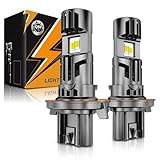
- UNIQUE DUAL FAN: Global firse use of dual fans in one single light. The 6-layer cooling system improves 150% cooling. NOTE: The sound from dual fans is louder than…
- 3-MIN INSTALLATION: No bulky base, No external driver box, No plastic adapter, No plastic plug. The h13 light features an all-in-one compact size design, Real plug…

- SEALIGHT X1 Series LED Headlight Bulbs
Known for easy installation and affordability. Provides decent beam focus and consistent output, making it a reliable entry-level option for projector headlight upgrades.

- 900% Breakthrough Brightness: The brightness of SEALIGHT H7 bulbs S3 series is 9X than traditional bulbs. We use high-power 7035 lamp beads, and the number of lamp…
- Perfect Non-Glare Design: The perfect light pattern is due to the SEALIGHT H7 bulbs S3 series lights use 0.04-inch ultra-thin chips. The clear low-light dividing…
How Projector Headlights Work (And Why Bulb Type Matters)
Projector headlights are designed to control and focus light into a sharp, directed beam.
Unlike reflector headlights, they use a lens and a cutoff shield to shape light precisely. This creates that clean horizontal line you see on the road at night.
The system depends heavily on the bulb’s light source position.
If the light doesn’t originate from the exact point the projector expects, the beam becomes distorted. This is where problems start when switching to LEDs.
Key Components of a Projector Headlight
- Lens: Focuses and magnifies the beam
- Cutoff shield: Prevents glare and shapes the beam pattern
- Reflector bowl: Directs light forward
- Bulb (halogen/HID): Designed to match the projector geometry
Why LED Bulbs Can Cause Issues
- LEDs emit light differently than halogen filaments
- Incorrect positioning leads to scattered or uneven beams
- Glare can blind oncoming drivers
Important Insight
Projector headlights built for halogen bulbs usually don’t work well with LEDs unless the LED replicates the exact filament position.
That’s why simply installing an LED bulb doesn’t guarantee better visibility—it can actually make things worse.
Are LED Bulbs Safe and Legal in Projector Headlights?
LED bulbs in projector headlights can be safe—but only under the right conditions.
If the LED bulb is specifically designed to match your projector housing, it can deliver excellent brightness and clarity. However, most aftermarket LED conversions are not perfectly aligned with the original halogen or HID design.
This mismatch creates safety concerns.
Instead of a focused beam, you may get scattered light, dark spots, or excessive glare. That glare is especially dangerous because it can temporarily blind oncoming drivers.
Safety Considerations You Should Know
- Beam pattern accuracy matters most
A poor beam pattern reduces your ability to see the road clearly. - Glare affects other drivers
Misaligned LEDs can cause dangerous visibility issues for others. - Heat management is critical
Low-quality LEDs can overheat and damage the headlight housing. - Brightness isn’t everything
More lumens don’t equal better visibility if the light isn’t controlled.
Are LED Headlight Conversions Legal?
Legality varies depending on your country and local road regulations.
In many regions, including parts of Africa and Europe, replacing a halogen bulb with an LED in a projector housing is only legal if:
- The LED bulb is approved for road use
- The entire headlight system remains compliant with factory standards
- The beam pattern passes inspection requirements
If your upgraded lights cause glare or fail inspection, they may be considered illegal—even if the bulbs themselves are marketed as “road legal.”
How to Stay Safe and Compliant
- Choose LEDs designed for projector headlights
- Ensure proper alignment after installation
- Test beam patterns against a wall before driving
- Avoid excessively high-lumen bulbs
Bottom Line
LED bulbs can be safe and legal in projector headlights—but only when they maintain the correct beam pattern and comply with regulations. Otherwise, they pose real safety risks.
Do LED Bulbs Work Better Than Halogen or HID in Projector Headlights?
LED bulbs can outperform halogen bulbs in projector headlights—but they don’t always beat HID systems.
Performance depends on how well the light source matches the projector’s design. Projector housings are typically optimized for either halogen or HID bulbs, so swapping in LEDs can produce mixed results.
LED vs Halogen in Projector Headlights
LEDs generally provide better brightness and efficiency than halogen bulbs.
They also produce a whiter light, which improves contrast and visibility at night. However, this only holds true if the LED bulb accurately mimics the halogen filament position.
Advantages of LED over halogen:
- Brighter, more intense light output
- Lower energy consumption
- Longer lifespan
Potential drawbacks:
- Beam scatter if not properly aligned
- Inconsistent performance across brands
LED vs HID in Projector Headlights
HID (High-Intensity Discharge) systems are often the best match for projector headlights.
That’s because many projector housings are originally engineered for HID bulbs, delivering a precise beam pattern and excellent road coverage.
Why HID often performs better:
- Superior beam focus in projector housings
- Better distance visibility
- More consistent light distribution
LEDs, on the other hand, can struggle to replicate the arc position of HID bulbs. This can lead to uneven lighting or reduced throw distance.
Quick Comparison Table
| Feature | LED | Halogen | HID |
|---|---|---|---|
| Brightness | High | Moderate | Very High |
| Beam Accuracy | Varies (depends on fit) | Good (designed match) | Excellent |
| Lifespan | Long | Short | Medium |
| Efficiency | Very High | Low | High |
| Compatibility | Conditional | Best (OEM match) | Best (if designed for it) |
Key Takeaway
- LED > Halogen (if properly designed)
- HID > LED (in most projector setups)
Expert Insight
If your projector headlights came with halogen bulbs, a high-quality LED upgrade can be worthwhile—but only if it maintains beam accuracy.
If your system uses HID, switching to LED is usually not recommended unless the entire projector is redesigned for LEDs.
How to Install LED Bulbs in Projector Headlights the Right Way
Installing LED bulbs in projector headlights isn’t just plug-and-play—it requires precision to ensure safety and performance.
A proper installation ensures the beam remains focused, glare is minimized, and you actually gain better visibility instead of making things worse.
Step-by-Step Installation Guide
- Choose the Right LED Bulb Type
Make sure the LED bulb matches your vehicle’s socket type (e.g., H11, 9005).
Also, pick a model designed to replicate halogen filament positioning. - Access the Headlight Housing
Open your car’s hood and locate the back of the headlight assembly.
Remove the dust cover carefully to avoid damage. - Remove the Old Bulb
Disconnect the power connector and gently twist out the halogen or HID bulb.
Avoid touching the glass if you plan to reuse it. - Install the LED Bulb Correctly
Insert the LED bulb into the socket and secure it firmly.
Ensure the LED chips face left and right (horizontal), not up and down—this is critical for beam accuracy. - Reconnect and Secure Components
Plug in the LED driver and ensure wiring is neatly arranged.
Replace the dust cover, making sure there’s enough space for the heat sink or cooling fan. - Test the Beam Pattern
Turn on your headlights and shine them against a wall about 3–5 meters away.
Look for a sharp cutoff line without scattered light or dark spots.
Pro Tips for Best Results
- Adjust the bulb rotation if your LEDs allow it—fine-tuning can improve beam focus
- Avoid cheap LEDs with poor chip alignment
- Check for flickering, which may require a CANbus decoder
- Ensure proper cooling to prevent overheating
Common Mistakes to Avoid
- Installing LEDs upside down (causes glare)
- Ignoring beam alignment after installation
- Forcing bulbs into incompatible housings
- Blocking ventilation with oversized heat sinks
Quick Safety Check
After installation, take a short night drive and observe:
- Road visibility
- Oncoming driver reactions
- Beam consistency
Key Takeaway
Correct installation is the difference between a powerful upgrade and a dangerous setup.
Even the best LED bulb will perform poorly if it’s misaligned or improperly installed.
Common Problems with LED Bulbs in Projector Headlights (And How to Fix Them)
Even high-quality LED bulbs can cause issues in projector headlights if they’re not perfectly matched or installed.
The good news is that most of these problems are fixable with the right adjustments or components.
Scattered Beam Pattern or Glare
This is the most common issue drivers face after installing LEDs.
Instead of a clean cutoff line, the light spreads unevenly or shines into oncoming traffic.
Causes:
- Incorrect LED chip alignment
- Poor bulb design (doesn’t mimic halogen filament)
- Wrong installation angle
Fix:
- Rotate the LED bulb until the chips face left and right
- Choose a model with precise filament replication
- Re-test beam pattern against a wall
Dark Spots or Uneven Lighting
You may notice patches of dim light or inconsistent brightness on the road.
This reduces visibility and defeats the purpose of upgrading.
Causes:
- Mismatch between LED and projector optics
- Low-quality LED chips
- Improper seating in the socket
Fix:
- Reinstall the bulb to ensure it’s fully seated
- Upgrade to a higher-quality LED model
- Consider reverting to halogen or HID if the issue persists
Flickering or Dashboard Errors
Some vehicles don’t recognize LED bulbs properly, leading to flickering or warning messages.
This is common in modern cars with sensitive electrical systems.
Causes:
- CANbus compatibility issues
- Voltage fluctuations
- Low resistance in LED circuits
Fix:
- Install a CANbus decoder or anti-flicker harness
- Use LEDs specifically labeled as “error-free”
- Check wiring connections
Overheating and Reduced Lifespan
LEDs generate heat at the base, not the front.
If cooling is inadequate, performance drops and lifespan shortens.
Causes:
- Poor heat sink design
- Blocked airflow inside the housing
- Cheap or poorly built bulbs
Fix:
- Ensure the cooling fan or heat sink has enough space
- Avoid sealing off ventilation areas
- Invest in LEDs with efficient thermal management
Poor Distance Visibility
Sometimes LEDs look bright up close but fail to illuminate far distances.
This creates a false sense of improved performance.
Causes:
- Incorrect focal point in projector housing
- Beam scatter reducing forward throw
- Low-quality optics
Fix:
- Adjust beam alignment carefully
- Test visibility on a dark road
- Switch to HID if long-distance clarity is critical
Quick Troubleshooting Checklist
- Check bulb orientation
- Test beam pattern on a wall
- Verify compatibility with your projector
- Inspect cooling and wiring
- Upgrade components if necessary
Most LED headlight problems come down to compatibility and alignment—not the technology itself.
Fix those two factors, and you can dramatically improve both safety and performance.
Conclusion
LED bulbs can work in projector headlights, but only when compatibility and proper installation are prioritized.
As you’ve seen, projector housings rely heavily on precise light positioning. Swapping in LEDs without considering beam alignment, bulb design, and legal standards can lead to glare, poor visibility, and safety risks.
However, when you choose high-quality LEDs and install them correctly, they can offer better brightness, efficiency, and modern lighting performance. The key is to focus on beam accuracy—not just lumen output
Frequently Asked Questions About “Can I Put LED Bulbs in a Projector Headlight?”
Can I legally install LED bulbs in projector headlights?
It depends on your location and the type of LED bulb you use. In many regions, LED conversions are only legal if they maintain the original beam pattern and meet road safety standards. If your lights cause glare or fail inspection, they may be considered illegal.
Will LED bulbs make my projector headlights brighter?
Yes, LED bulbs can appear brighter than halogen bulbs. However, brightness alone doesn’t guarantee better visibility. If the beam pattern is distorted, you may actually see less of the road despite higher light output.
Do I need special projector headlights for LED bulbs?
Ideally, yes. Projector headlights designed specifically for LED systems provide the best performance. Standard halogen projectors may not work well with LEDs unless the bulb closely mimics the original filament position.
Why do my LED headlights scatter light everywhere?
This usually happens بسبب incorrect alignment or poor bulb design. LEDs emit light differently than halogen bulbs, so if they’re not positioned correctly, the beam becomes unfocused and causes glare.
Are LED bulbs better than HID in projector headlights?
Not always. HID systems are often better suited for projector housings because they match the optical design more closely. LEDs can perform well, but only if they’re properly engineered for that specific setup.
How do I know if my LED bulbs are installed correctly?
Park your car facing a wall and turn on the headlights. You should see a sharp, even cutoff line with no scattered light. If the beam looks uneven or blurry, adjustments are needed.
Can LED bulbs damage my projector headlights?
High-quality LEDs are generally safe, but poorly designed ones can overheat or strain your vehicle’s electrical system. Always choose reliable products with proper cooling systems.
Can a Projector Get a Virus?why you need to know
This website is a participant in the Amazon Services LLC Associates Program, an affiliate advertising program designed to provide a means for us to earn fees by linking to Amazon.com and affiliated sites.