
This website is a participant in the Amazon Services LLC Associates Program, an affiliate advertising program designed to provide a means for us to earn fees by linking to Amazon.com and affiliated sites.
The Meta Quest Pro is the Meta Quest headset with dedicated visual face tracking, while Quest 2, Quest 3, and Quest 3S can provide audio-based facial expression tracking. This distinction is important because “face tracking” can refer to different technologies and levels of facial movement detection.
The Meta Quest Pro uses inward-facing sensors to detect expressive facial movements, allowing compatible applications to translate expressions into avatar movements. Meta’s Movement SDK can represent expressions such as smiling, blinking, and other facial actions through blendshapes.
By comparison, Quest 2, Quest 3, and Quest 3S do not have the same inward-facing facial cameras. Instead, supported face-tracking functionality can use microphone audio to estimate facial expressions.
This guide explains which Meta Quest models have face tracking, how each approach works, what the technology can do, and what to consider when choosing a headset for expressive VR experiences.
Best for Meta Quest Face Tracking: Meta Quest Pro, Meta Quest 3, and Meta Quest 3S
Meta’s current developer documentation distinguishes visual face tracking from audio-based facial expression tracking. The Quest Pro uses inward-facing cameras for visual face tracking, while Quest 2 and later headsets can use microphone audio to estimate facial expressions.
Meta Quest Pro
Why we picked it ?
Meta Quest Pro is the strongest choice for dedicated face tracking because inward-facing cameras visually detect facial movements, while eye tracking adds expressive avatar capabilities.
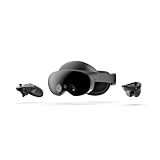
- Meta Quest Pro unlocks new perspectives in work, creativity, and collaboration.
- Multitask with ease with multiple resizable screens so you can organize tasks, work on new ideas or message with your friends.
Related products:
- Meta Quest Pro facial interface
- Meta Quest Pro replacement controllers
- VR lens inserts
- USB-C charging cable
The Quest Pro is specifically listed by Meta as supporting visual and audio-to-expression face tracking, making it particularly relevant for applications that need more direct facial movement detection.
Meta Quest 3
Why we picked it ?:
Meta Quest 3 offers audio-based facial expression tracking alongside newer hardware, making it useful for users who want expressive avatars without requiring Quest Pro’s inward-facing cameras.

- CARDBOARD MONKENAUT — Get our best Gorilla Tag bundle yet with this Amazon exclusive deal. Purchase Meta Quest 3S to get exclusive items, including the Gorilla…
- NO WIRES, MORE FUN — Break free from cords. Game, play and explore immersive worlds — untethered and without limits.

Related products:
- Meta Quest 3 Elite Strap
- Meta Quest 3 facial interface
- Prescription VR lens inserts
- Quest 3 carrying case
Meta’s Movement SDK documentation identifies Quest 3 as supporting audio-to-expression face tracking, rather than camera-based visual face tracking.
Meta Quest 3S
Why we picked it ?
Meta Quest 3S supports audio-based facial expression tracking while offering a more accessible entry point, making it suitable for users interested in expressive social VR experiences.
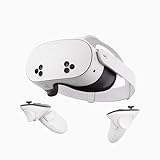
- NO WIRES, MORE FUN — Break free from cords. Game, play, exercise and explore immersive worlds — untethered and without limits.
- 2X GRAPHICAL PROCESSING POWER — Enjoy lightning-fast load times and next-gen graphics for smooth gaming powered by the SnapdragonTM XR2 Gen 2 processor.
Related products:
- Meta Quest 3S Elite Strap
- Quest 3S facial interface
- VR carrying case
- Replacement charging accessories
Meta’s current compatibility documentation lists Quest 3S as supporting audio-to-expression face tracking, although it does not have the inward-facing camera system used for visual face tracking.
Quick comparison
| Headset | Face-tracking method | Eye tracking | Best suited for |
|---|---|---|---|
| Meta Quest Pro | Visual + audio | Yes | Dedicated facial and eye tracking |
| Meta Quest 3 | Audio to expressions | No | Mainstream expressive VR |
| Meta Quest 3S | Audio to expressions | No | Entry-level expressive VR |
Important distinction: If your article specifically means camera-based face tracking, the Meta Quest Pro is the relevant model. If you mean facial-expression tracking generally, Meta’s current Movement SDK supports audio-to-expression tracking on Quest 2 and later models.
Which Meta Quest Headsets Have Face Tracking?
Meta Quest face tracking varies significantly by headset because “face tracking” can describe either visual tracking with inward-facing cameras or audio-based estimation of facial expressions. Understanding this difference helps explain why two Quest headsets can both advertise facial-expression capabilities while using very different hardware.
The Meta Quest Pro is the Quest model specifically equipped with inward-facing cameras for visual face tracking. These cameras can capture movements around the eyes and face and provide facial-expression information to compatible software. Meta’s developer documentation identifies Quest Pro as supporting visual face tracking, alongside audio-to-expression tracking.
The Meta Quest 2, Quest 3, and Quest 3S take a different approach for supported applications. Meta’s Movement SDK documentation describes audio-to-expression face tracking, which uses microphone input to estimate certain facial expressions rather than observing the user’s face directly with inward-facing cameras.
This creates an important distinction:
- Quest Pro: Visual face tracking plus audio-to-expression tracking.
- Quest 2: Audio-to-expression tracking where supported.
- Quest 3: Audio-to-expression tracking where supported.
- Quest 3S: Audio-to-expression tracking where supported.
The availability of these capabilities can also depend on the application, SDK, operating-system version, and developer implementation. Having compatible hardware does not necessarily mean every VR application will automatically animate your face.
For users specifically interested in facial expressions appearing on VR avatars, Quest Pro provides the dedicated camera-based hardware. For users primarily interested in newer standalone Quest hardware and supported expressive-avatar features, Quest 3 and Quest 3S can offer audio-based alternatives.
How Does Face Tracking Work on Meta Quest Headsets?
Meta Quest face tracking works by detecting or estimating facial movements and converting them into digital expression data that compatible applications can use to animate avatars. The exact process depends on the headset: Quest Pro uses inward-facing cameras for visual face tracking, while Quest 2, Quest 3, and Quest 3S use microphone audio for Audio To Expression tracking.
On Quest Pro, internal sensors observe facial movements around areas such as the eyes, cheeks, mouth, and eyebrows. Meta’s tracking system converts these movements into numerical blendshape weights, which indicate how strongly particular facial expressions are being performed.
For example, a smile does not necessarily correspond to one single movement. Several facial actions can be combined, including movement around the mouth, cheeks, and eyes, allowing developers to create a more natural-looking animated avatar.
On Quest 2, Quest 3, and Quest 3S, Audio To Expression analyzes microphone audio and uses a machine-learning model to estimate facial expressions from speech and other vocal sounds. This approach does not visually observe the user’s face, so it should not be confused with Quest Pro’s camera-based tracking.
The resulting expression data can then be mapped to an avatar’s facial blendshapes, making the virtual character blink, smile, move its mouth, or display other supported expressions. However, the application must specifically implement Meta’s tracking APIs or Movement SDK features for these capabilities to appear.
Does Meta Quest 3 Have True Face Tracking?
Meta Quest 3 does have face-tracking functionality, but it does not have true visual face tracking like the Meta Quest Pro. The distinction comes down to how the headset detects facial expressions. Meta’s documentation states that Quest 3 lacks inward-facing cameras for facial tracking and instead uses microphone audio to estimate facial movements through its Audio To Expression system.
With Audio To Expression, the headset’s microphone captures the user’s voice and other vocal sounds. A machine-learning model analyzes this audio and generates expression information that compatible applications can use to animate an avatar’s face. Meta says the system can create fuller facial representations from voices, including movements associated with speaking, laughing, and coughing.
This means Quest 3 can produce expressive avatar animation, but it is different from a camera actually observing your cheeks, eyebrows, eyes, or mouth. The Meta Quest Pro, by contrast, uses inward-facing cameras to detect expressive facial movements directly.
There is another important difference: Quest 3 does not have dedicated eye-tracking hardware, whereas Quest Pro does. Consequently, Quest 3 should not be considered a replacement for Quest Pro when an application specifically requires visual facial and eye tracking.
For everyday social VR, however, Quest 3’s audio-based approach can still provide noticeably more expressive avatars when developers implement Meta’s Movement SDK. Meta currently documents Audio To Expression support across Quest 2, Quest 3, Quest 3S, and Quest Pro.
Does Meta Quest 3S Have Face Tracking?
Yes, the Meta Quest 3S supports face tracking through Audio To Expression, but it does not have visual, camera-based face tracking. Meta’s current Movement SDK compatibility information lists Quest 3S as supporting Audio to Expressions only, with no dedicated eye tracking.
Instead of using inward-facing cameras to watch the user’s facial movements, Quest 3S can use its microphone audio to estimate facial expressions. Meta describes Audio To Expression as a machine-learning system that analyzes the audio stream and generates facial-expression information that applications can map onto an avatar.
This can make social VR avatars appear more expressive while users are speaking, laughing, or making other vocal sounds. However, it is important to understand that the headset is estimating expressions from audio rather than directly seeing your face.
For developers, the resulting expression information can be mapped to character blendshapes, allowing an avatar’s mouth, cheeks, eyes, eyebrows, and other facial features to animate according to supported expressions. Meta says Audio To Expression is available across Quest 2, Quest 3, Quest 3S, and Quest Pro.
The distinction matters when comparing the Quest 3S with the Meta Quest Pro. Quest Pro has inward-facing cameras for visual face tracking and also supports audio-based tracking, whereas Quest 3S provides the audio-based approach without those dedicated inward-facing facial cameras.
Therefore, if by “face tracking” you mean camera-based facial movement detection, Quest 3S does not provide that capability. If you mean audio-driven facial animation for compatible applications, then Quest 3S does support it.
Does Meta Quest 2 Have Face Tracking?
Yes, Meta Quest 2 supports face tracking, but only through audio-based facial-expression tracking rather than visual face tracking. Meta’s current Movement SDK compatibility documentation lists Quest 2 as supporting Audio to Expressions only, while visual facial tracking is reserved for Meta Quest Pro.
On Quest 2, the system can use the headset’s microphone audio to estimate facial movements. Meta’s Audio To Expression technology analyzes the audio stream with a machine-learning model and converts vocal information into facial-expression data that compatible applications can use to animate avatars.
This means Quest 2 can produce more expressive avatar animation while a user is speaking, laughing, or making other sounds. However, the headset is not looking at the user’s face with inward-facing cameras, so this should not be confused with the visual face tracking available on Quest Pro.
For developers, the generated information can be represented through facial blendshapes. These values can control different parts of an avatar’s face, helping create movements associated with expressions and speech. Meta’s Movement SDK documentation explains that audio-based tracking can provide FACS-style expressions or Oculus visemes for compatible applications.
There are also important limitations. Because Quest 2’s approach is based on audio rather than direct visual observation, it cannot determine every facial movement in the same way as Quest Pro’s inward-facing cameras. Meta also notes that Audio To Expression is designed around speech and can have limitations with expressions such as yawning.
Therefore, if you are asking “Does Quest 2 have any face tracking?”, the answer is yes. If you mean camera-based facial tracking that directly observes facial movements, the answer is no. For supported applications, however, Quest 2 can still provide audio-driven facial animation through Meta’s Movement SDK.
What Is the Difference Between Meta Quest Pro, Quest 3, Quest 3S, and Quest 2 Face Tracking?
The main difference is how each headset obtains facial-expression information. Meta Quest Pro has dedicated inward-facing cameras for visual face tracking, while Quest 2, Quest 3, and Quest 3S rely on Audio To Expression for supported facial-expression features.
Meta Quest Pro
Quest Pro is the only headset in this comparison with dedicated inward-facing cameras designed to track facial movements visually. Meta’s developer documentation lists it as supporting visual face tracking, eye tracking, and audio-to-expression tracking.
This allows compatible software to obtain information about movements around the user’s eyes and face and translate those movements into avatar expressions.
Meta Quest 3
Quest 3 does not include the inward-facing facial cameras found on Quest Pro. Instead, supported applications can use Audio To Expression, which analyzes microphone audio and uses machine learning to estimate facial expressions.
Quest 3 also lacks dedicated eye-tracking hardware, so it should not be treated as having the same facial and eye-tracking capabilities as Quest Pro.
Meta Quest 3S
Quest 3S follows essentially the same face-expression approach as Quest 3. Meta lists it as supporting audio-to-expression tracking, rather than visual face tracking.
Consequently, its facial-expression capabilities depend heavily on compatible software implementing the relevant Meta SDK features.
Meta Quest 2
Quest 2 can also support Audio To Expression in compatible applications. Its microphone audio can be processed to generate expression information for avatar animation, but the headset does not visually track the user’s face.
| Headset | Visual face tracking | Audio-to-expression | Eye tracking |
|---|---|---|---|
| Quest Pro | Yes | Yes | Yes |
| Quest 3 | No | Yes | No |
| Quest 3S | No | Yes | No |
| Quest 2 | No | Yes | No |
The practical takeaway is that “face tracking” does not mean the same thing across the Quest family. Quest Pro provides direct visual facial tracking, while the other three models can generate facial-expression animation from audio when supported by the application.
Conclusion
The answer to what Meta Quest has face tracking depends on what type of tracking you mean. The Meta Quest Pro provides dedicated visual face tracking through inward-facing cameras and also supports audio-based expression tracking, making it distinct from the other Quest models discussed.
The Meta Quest 2, Quest 3, and Quest 3S can support audio-to-expression tracking in compatible applications, but they do not provide the same camera-based facial tracking as Quest Pro. This distinction is especially important when choosing a headset for expressive avatars, social VR, or development.
Before purchasing, check the specific application’s requirements because face-tracking support depends on software implementation. Understanding these hardware and software differences can help you choose a Quest headset that matches the facial-expression features you actually need.
Frequently Asked Questions About “What Meta Quest Has Face Tracking?”
Does Meta Quest Pro have face tracking?
Yes. Meta Quest Pro has visual face tracking using inward-facing cameras. It also supports audio-based facial-expression tracking and eye tracking, making it the Quest model with the most comprehensive facial and eye-tracking capabilities in this comparison.
Does Meta Quest 3 have face tracking?
Quest 3 supports Audio To Expression, but it does not have inward-facing cameras for visual face tracking. Its microphone audio can be analyzed to estimate facial expressions in compatible applications.
Does Meta Quest 3S have face tracking?
Yes, Quest 3S supports audio-based facial-expression tracking through Audio To Expression. However, it does not provide the visual face-tracking system found on Quest Pro.
Does Meta Quest 2 have face tracking?
Quest 2 supports Audio To Expression for compatible applications. Its facial-expression information is generated from microphone audio rather than inward-facing cameras.
Can Quest 3 track your eyes?
Quest 3 does not have dedicated eye-tracking hardware according to Meta’s current Movement SDK compatibility information. Quest Pro supports eye tracking, while Quest 2, Quest 3, and Quest 3S are listed without it.
Does face tracking work in every Quest game?
No. Hardware support alone does not guarantee that every application will use face tracking. Developers need to implement the appropriate Meta face-tracking APIs or Movement SDK functionality, and the avatar must be configured to respond to expression data.
Is Meta Quest face tracking the same as lip tracking?
Not necessarily. Audio-based tracking can generate facial expressions as well as visemes for speech-related animation. Meta’s Movement SDK is designed to provide broader facial-expression data than traditional lip-sync systems.
Which Quest should you choose for visual face tracking?
For visual, camera-based face tracking, Meta’s documentation identifies the Quest Pro as the relevant model. Quest 2, Quest 3, and Quest 3S instead use audio-based facial-expression tracking where supported.
This website is a participant in the Amazon Services LLC Associates Program, an affiliate advertising program designed to provide a means for us to earn fees by linking to Amazon.com and affiliated sites.