This website is a participant in the Amazon Services LLC Associates Program, an affiliate advertising program designed to provide a means for us to earn fees by linking to Amazon.com and affiliated sites.
Understand how contrast ratio affects projector performance and learn why it matters for movies, gaming, and presentations.
The contrast ratio in projectors is one of the most critical factors affecting image quality, especially in darker viewing environments.
Imagine watching your favorite movie, and the shadowy scenes appear washed out or dull—this is often due to a low contrast ratio. The contrast ratio refers to the difference between the darkest black and the brightest white a projector can display. A higher contrast ratio typically results in sharper details, more depth, and better overall image clarity.
But how important is contrast ratio really—especially when comparing projectors for home theater, gaming, or business use?
While brightness and resolution often steal the spotlight, contrast ratio plays a huge role in your viewing experience. It influences how vivid colors appear and how well you can distinguish details in dark or high-action scenes.
Best for Watching Movies, Gaming, and Presentations
If you’re shopping for a projector and wondering how much contrast ratio really matters, here are three standout models that deliver excellent performance across various activities:
Epson Home Cinema 5050UB – Best for Movies
This projector boasts an impressive dynamic contrast ratio of up to 1,000,000:1, producing deep blacks and cinematic clarity.
Why we picked it:
It delivers exceptional image quality with rich contrast, making it perfect for dark room movie nights and 4K content enthusiasts.

- 4K PRO-UHD (1) Projection Technology – A new type of 4K home theater…
- True 3-Chip Projector Design – Advanced 3LCD technology displays 100% of…
- Pixel-Shift Processor – Advanced pixel-shifting processor precisely…
BenQ X3000i – Best for Gaming
A 500,000:1 contrast ratio combined with 4ms low input lag makes this projector a gamer’s dream.
Why we picked it:
Its vibrant visuals, sharp blacks, and ultra-fast response time ensure immersive, lag-free gameplay even in fast-paced titles.

- 4K HDR 100%DCI-P3 REALISTIC COLOR: True 4K resolution and 100% wide color…
- 4MS LOWEST LATENCY SWIFT AND SMOOTH: Ultra-fast 4ms@1080p/240Hz in ‘fast…
- SET UP YOUR GAME ROOM ANYWHERE: 3000 ANSI lumens brightness; 100-inch…
ViewSonic PX701-4K – Best for Presentations
With a 12,000:1 contrast ratio and 3,200 ANSI lumens, this projector is ideal for bright rooms and professional use.
Why we picked it:
It provides great clarity in ambient light, making text and graphics crisp for meetings, slideshows, and educational content.
These projectors prove that contrast ratio can greatly enhance your experience—whether you’re watching a blockbuster, gaming online, or delivering a business pitch.
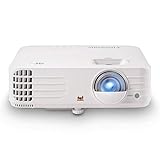
- 4K Home Theater Projector: UHD (3840x2160p) 4K resolution with a…
- Designed for Fast Paced Content: Experience gaming on the big screen with…
- Vibrant Colors & HDR Support: SuperColor technology and HDR/HGL…
What Is Contrast Ratio and How Does It Work in Projectors?
The contrast ratio in a projector refers to the difference between the brightest white and the darkest black it can display. It’s usually expressed as a ratio—for example, 1,000:1 means the brightest white is 1,000 times brighter than the darkest black.
A higher contrast ratio allows for deeper blacks, which enhances image depth, color accuracy, and detail—especially in dark scenes. In practical terms, it makes movies more lifelike, games more immersive, and text presentations easier to read.
There are two types of contrast ratios to know:
- Native Contrast Ratio: This is the true contrast capability of the projector’s hardware.
- Dynamic Contrast Ratio: This uses software or iris adjustments to enhance contrast in real time. While dynamic ratios often sound higher, native contrast offers more reliable, consistent qualit
Here’s a breakdown of how it works:
- Light control: Projectors with higher contrast ratios better control how light is projected on the screen.
- Black level performance: The ability to reproduce true blacks determines how “washed out” the image appears in dark scenes.
- Color vibrancy: High contrast enhances color separation, making reds, blues, and greens stand out clearly.
Quick Tip: Always consider both contrast ratio and room lighting. Even the best contrast ratio can be diminished in a brightly lit room.
So, while resolution and brightness matter, contrast ratio is equally essential. It defines how “alive” your visuals look on the screen—and is often the deciding factor between a mediocre and a spectacular viewing experience.
Why Contrast Ratio Matters More Than You Think
When shopping for a projector, most people focus on resolution or brightness. But contrast ratio often has a greater impact on the overall picture quality—especially in real-world use.
Here’s why contrast ratio matters more than it gets credit for:
Depth and Dimensionality
A high contrast ratio enhances depth by providing a stronger distinction between shadows and highlights. This gives the image a more three-dimensional, cinematic feel—especially important for movies or TV shows filmed in low light.
Detail Visibility in Dark Scenes
Low contrast ratios can make dark scenes appear muddy or flat. High contrast allows you to see subtle textures and background details in dim scenes—crucial for genres like horror, sci-fi, or thrillers.
Color Accuracy and Pop
High contrast improves color accuracy and vibrancy. Bright scenes become more vivid, and dark scenes retain their realism. The color difference between objects is sharper, leading to more lifelike visuals.
Better Viewing in Controlled Lighting
In home theaters or dedicated dark rooms, contrast ratio becomes even more important than brightness. A high contrast projector truly shines in these environments, creating rich, immersive visuals.
Enhances Gaming and Presentation Clarity
Gamers benefit from better visibility in shadowy game areas, while professionals presenting slides or charts enjoy clearer text and sharper graphics.
Did You Know? Even projectors with the same resolution can look drastically different due to contrast performance alone.
So, while specs like 4K sound impressive, they won’t reach their full potential without a good contrast ratio. It’s not just about the image—it’s about the experience.
How Contrast Ratio Affects Different Uses (Movies, Gaming, Presentations)
Contrast ratio doesn’t affect all activities equally. Depending on how you plan to use your projector, contrast may be either essential or moderately important. Let’s break it down by use case:
For Movies & Home Theater
This is where contrast ratio shines the most. Films—especially cinematic or dark-toned ones—rely heavily on black levels and shadow detail. A high contrast ratio brings scenes to life, whether it’s the shadows of a noir thriller or the space vistas of a sci-fi blockbuster.
- Deeper blacks = more immersive viewing.
- Details in dark scenes are clearer.
- Essential for dark room setups.
For Gaming
Gamers need to see everything—especially in darker game environments. High contrast ensures that shadows don’t hide enemies or objects, which could affect gameplay.
- Improves reaction time by increasing visibility.
- Enhances texture and lighting effects.
- Adds realism to both bright and dark in-game scenes.
Pro Tip: Pair high contrast with low input lag for the ultimate gaming projector.
For Presentations & Office Use
In bright office settings, contrast helps text stand out against white backgrounds and enhances graph legibility.
- High contrast makes data easier to read.
- Improves visibility of fine details in charts or diagrams.
- Important for educational and business applications.
However, in well-lit rooms, brightness may be a slightly more critical spec than contrast. That said, a balanced projector with good contrast and high lumens is ideal.
Whether you’re binge-watching Netflix, defeating bosses in a dark dungeon, or presenting quarterly results, understanding how contrast impacts your activity helps you choose the right projector for your needs.
Contrast Ratio vs. Brightness: Which One Matters More?
When evaluating projector specs, most people ask: “Should I prioritize contrast ratio or brightness?” The honest answer? It depends on your environment.
Brightness: The Key for Well-Lit Rooms
Brightness, measured in lumens, determines how visible your projector image will be in ambient light. In spaces with windows or overhead lighting, higher lumens (2,500 or more) ensure that the image doesn’t look faded or washed out.
- Ideal for classrooms, offices, or outdoor setups.
- Helps maintain clarity in light-heavy conditions.
- Doesn’t improve black levels—just image visibility.
Contrast Ratio: The Key for Image Depth
Contrast ratio, on the other hand, defines how deep and vibrant your images appear. It affects black levels, shadow details, and how “alive” your visuals feel—especially in dark rooms.
- Crucial for home theaters.
- Enhances mood and cinematic feel.
- Determines how realistic dark or moody scenes look.
Finding the Right Balance
The best projector balances both specs:
| Use Case | Ideal Contrast | Ideal Brightness |
|---|---|---|
| Home Theater (Dark) | High (≥100,000:1) | Moderate (1,500–2,500 lumens) |
| Gaming | High (≥50,000:1) | High (2,500–3,000 lumens) |
| Office/Presentation | Medium (10,000:1) | High (≥3,000 lumens) |
Rule of Thumb:
- In dark rooms, prioritize contrast ratio.
- In bright rooms, prioritize brightness.
Ultimately, if you want a visually stunning image in the right lighting conditions, you’ll need to weigh both factors. Choosing only one could mean sacrificing overall image quality.
How to Choose the Right Contrast Ratio for Your Needs.
Choosing the right contrast ratio comes down to how and where you plan to use your projector. Here’s how to make an informed decision based on your specific needs.
Home Theater Use
If you’re building a dedicated theater room with low ambient light, go for a projector with a native contrast ratio of at least 100,000:1. This ensures deep blacks, enhanced color depth, and true cinematic visuals.
Best for:
- Movie lovers
- Streaming 4K content
- Dark environments
Recommended: Epson 5050UB or similar high-contrast models.
Gaming
For immersive gameplay, aim for a contrast ratio of 50,000:1 or higher with fast refresh rates and low latency. Games often include dark areas where enemies or items may be hidden, so strong contrast makes a big difference.
Best for:
- Action and FPS games
- RPGs with dark environments
- Mixed lighting setups
Recommended: BenQ X3000i with both gaming and contrast performance.
Office and Classroom Use
In bright rooms, you don’t need ultra-high contrast. A contrast ratio of 10,000:1 to 15,000:1 is typically enough, especially when paired with a high brightness output (≥3,000 lumens).
Best for:
- PowerPoint presentations
- Training sessions
- Daylight/overhead-lit environments
Recommended: ViewSonic PX701-4K for solid contrast and strong brightness.
Final Tips:
- Always look for native contrast specs over inflated dynamic contrast numbers.
- Test in your environment if possible.
- Consider your content type: darker scenes need higher contrast.
Choosing the right contrast ratio is about maximizing image clarity and impact. When matched to your space and purpose, it makes all the difference.
Conclusion
Contrast ratio is one of the most underrated but essential aspects of projector performance. Whether you’re building a home theater, gearing up for a gaming marathon, or prepping for a presentation, the right contrast ratio can dramatically improve your visual experience.
It affects how deep your blacks are, how vibrant your colors appear, and how much detail you can see in shadows or bright areas. While brightness and resolution matter, contrast ratio often defines the quality of the image—especially in darker environments.
So before making a purchase, think about your viewing space, content type, and lighting conditions. Matching the contrast ratio to your needs ensures you’re getting the best picture quality possible.
Want to dive deeper into choosing the right projector? Check out our related guides:
- [Best Projectors for Home Theaters in 2025]
- [How Bright Should Your Projector Be?]
- [Native vs. Dynamic Contrast Ratio: What You Need to Know]
Frequently Asked Questions About Contrast Ratio in Projectors
What is a good contrast ratio for a projector?
A good contrast ratio depends on your use case. For home theaters, aim for at least 100,000:1 for deep blacks and rich color detail. For gaming, 50,000:1 or higher is ideal. In well-lit rooms like offices or classrooms, 10,000:1 to 15,000:1 is generally sufficient when combined with high brightness.
Is contrast ratio more important than brightness?
It depends on your environment. In dark rooms, contrast ratio is often more important because it determines shadow detail and color depth. In bright rooms, brightness becomes the priority to ensure the image is visible. The best projectors strike a balance between both.
What’s the difference between native and dynamic contrast ratio?
- Native Contrast Ratio is the actual contrast capability of the projector without enhancement. It provides a consistent, true-to-spec experience.
- Dynamic Contrast Ratio uses processing tricks like adjusting the light output dynamically. These numbers are often inflated and less reliable for comparison.
Always prioritize native contrast specs for a more accurate evaluation.
How does contrast ratio affect movies and games?
In movies, a high contrast ratio delivers better black levels and detail in dark scenes, making for a more immersive cinematic experience. In gaming, it helps you spot enemies, items, or hidden elements in dark areas—essential for fast-paced or visually rich titles.
Can I improve contrast ratio with a screen or room setup?
Yes! Using a high-gain screen and minimizing ambient light (dark walls, blackout curtains) can enhance perceived contrast significantly—even if your projector’s hardware specs are modest.
This website is a participant in the Amazon Services LLC Associates Program, an affiliate advertising program designed to provide a means for us to earn fees by linking to Amazon.com and affiliated sites.