This website is a participant in the Amazon Services LLC Associates Program, an affiliate advertising program designed to provide a means for us to earn fees by linking to Amazon.com and affiliated sites.
The ideal distance between a projector and the screen depends on the projector’s throw ratio, screen size, and the room layout—but most home setups need a range of 5 to 15 feet.
Did you know that placing your projector just a few feet too close or too far can make or break your viewing experience? Whether you’re setting up a cozy home theater, a backyard movie night, or a professional presentation space, understanding how far away a projector should be from the screen is essential for crystal-clear visuals and immersive sound.
Many people assume all projectors function the same way, but the reality is more complex. Factors like the throw ratio, aspect ratio, and screen size all influence the ideal placement. And with different types of projectors—standard, short throw, and ultra-short throw—the correct distance can vary significantly.
Best for Watching Movies, Gaming, and Business Presentations
If you’re wondering how far away a projector should be from the screen, your setup goal matters. Whether you’re binge-watching your favorite series, immersing yourself in gameplay, or presenting slides in a meeting room, the right projector makes all the difference. Here are three top choices based on use case:
Epson Home Cinema 3800 – Best for Watching Movies
This 4K PRO-UHD projector delivers sharp, vivid visuals even in moderately lit rooms. Ideal throw range of 8 to 16 feet makes it versatile for most home theaters.

- 4K PRO-UHD (1) Projection technology — a new type of 4K home theater experience, utilizing advanced technologies for resolution Enhancement, color and image…
- True 3-chip projector design — Advanced 3LCD technology displays 100 percent of the RGB color signal for every frame without any “rainbow effect” or color…

BenQ X3000i – Best for Gaming
Optimized for ultra-low latency (16ms), the BenQ X3000i supports 4K HDR gaming. Its flexible throw distance suits tight spaces, giving gamers big-screen action without delay.

- 4K HDR 100%DCI-P3 REALISTIC COLOR: True 4K resolution and 100% wide color gamut powered by BenQ CinematicColor and HDR-PRO for authentic color production
- 4MS LOWEST LATENCY SWIFT AND SMOOTH: Ultra-fast 4ms@1080p/240Hz in ‘fast’ mode or 16ms with 4K/60Hz low input lag for different gaming requirements
Optoma EH412 – Best for Business Presentations
Bright, lightweight, and professional, this model works great in offices or classrooms. It projects clear visuals at medium distances—perfect for presentations in large or small spaces.
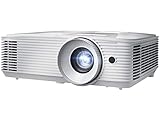
- High brightness: enjoy an incredible 4, 500 lumens of brightness in well lit meeting rooms, conference rooms, training rooms, classrooms and more
- 4K HDR input: enjoy vibrant colors, Brighter whites, deeper black levels and sharper images when paired with the latest 4K HDR video sources or 1080P hdr gaming…
Understanding Throw Ratio: The Key to Proper Projector Placement
One of the most important factors in determining how far away a projector should be from the screen is the throw ratio. This term refers to the relationship between the distance of the projector from the screen and the width of the image it produces.
A projector’s throw ratio is typically expressed as a ratio like 1.5:1. This means that for every 1.5 feet of distance from the screen, the image will be 1 foot wide. So, if your screen is 100 inches wide, and your projector has a 1.5:1 throw ratio, you’d need to place the projector 150 inches (12.5 feet) away from the screen.
Here’s how different types of throw ratios affect placement:
- Standard Throw (1.5:1 – 2.5:1): Requires a medium to long distance from the screen.
- Short Throw (0.4:1 – 1.0:1): Designed for smaller rooms, produces large images up close.
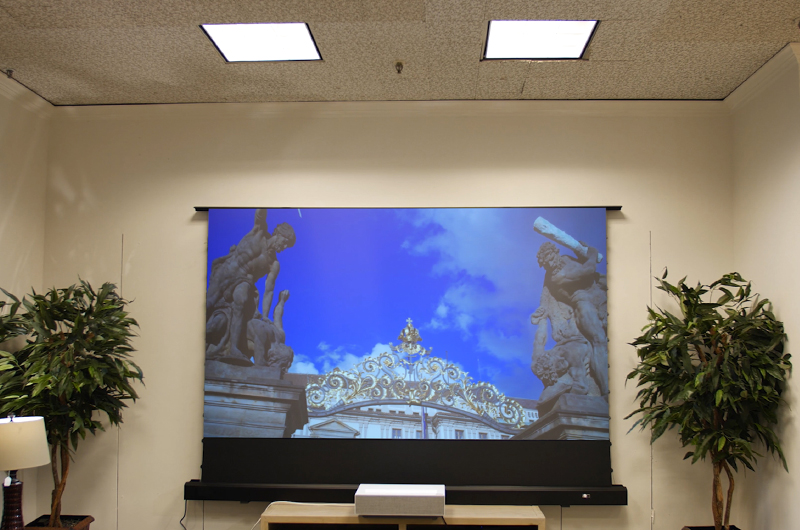
- Ultra Short Throw (less than 0.4:1): Sits just inches away, ideal for tight spaces or mounted just below the screen.
Why It Matters
Incorrect throw distance can cause:
- Blurry images if too close
- Oversized images that don’t fit your screen
- Distortion or keystone issues.
Most manufacturers include a projection distance calculator on their websites. Use it to enter your screen size and find the ideal projector placement distance.
Understanding your projector’s throw ratio gives you the blueprint to achieve the best screen size and clarity, whether you’re setting up in a bedroom or a boardroom.
Calculating the Ideal Projector Distance Based on Screen Size
To get the best image quality, you must know how far away your projector should be from the screen based on your screen size. This ensures sharp, distortion-free visuals that fill the screen just right.
How to Calculate Projector Distance.
- Determine Your Screen Width
First, measure the width of your projector screen. For example, a 100-inch diagonal 16:9 screen is approximately 87 inches wide. - Check Your Projector’s Throw Ratio
Look in the user manual or product specs. Most home projectors list a throw ratio range, such as 1.3–1.6:1. - Use the Throw Ratio Formula
Multiply the screen width by the throw ratio to get the recommended distance:- Distance = Throw Ratio × Screen Width
- Example: 1.5 (throw ratio) × 87 inches (screen width) = 130.5 inches, or roughly 10.9 feet
Projector Distance Quick Guide
| Screen Size (Diagonal) | Screen Width (Approx.) | Distance @ 1.5:1 Throw |
|---|---|---|
| 80 inches | 70 inches | 8.75 feet |
| 100 inches | 87 inches | 10.9 feet |
| 120 inches | 105 inches | 13.1 feet |
Factors That Can Affect Ideal Distance
- Zoom Lens Capabilities: Some projectors offer zoom lenses that give you flexible placement.
- Room Size & Obstacles: Furniture and walls can limit your options.
- Ambient Light: More distance can reduce brightness, especially in well-lit rooms.
Always test your projector before permanent mounting. Use painter’s tape to mark estimated distances and adjust based on picture quality and room conditions.
Projector Types and Their Recommended Distances
Not all projectors are built the same, and understanding the type of projector you have is essential to knowing how far away it should be from the screen. The three main categories—standard, short throw, and ultra-short throw—are designed for different use cases and spaces.
Standard Throw Projectors
- Typical Distance: 8 to 15 feet
- Best For: Large rooms, dedicated home theaters, business conference rooms
- Example: Epson Home Cinema 3800
Standard throw projectors are versatile but need significant space to deliver a large image. They often offer zoom lenses and are ceiling-mountable.
Short Throw Projectors
- Typical Distance: 3 to 8 feet
- Best For: Small to medium rooms, gaming setups, classrooms
- Example: BenQ X3000i
Short throw projectors provide large images from shorter distances, making them perfect for apartment setups or rooms with limited depth. They also reduce shadow interference.
Ultra-Short Throw (UST) Projectors
- Typical Distance: 0.5 to 2 feet
- Best For: Tight spaces, minimalist setups, living rooms with ambient light
- Example: LG HU85LA CineBeam
UST projectors sit directly under or just in front of the screen. They’re sleek, modern, and reduce the need for ceiling mounts or long cables—but they’re usually more expensive.
Choosing the Right Type
- Room size: Measure your available space before buying.
- Viewing angle: Ensure the projector’s distance fits your ideal line of sight.
- Budget: UST projectors are convenient but can be twice the price of standard models.
Understanding the strengths and limitations of each projector type helps you confidently decide how far to place it for an optimized viewing experience.
Room Layout Considerations: Light, Height, and Screen Positioning
Even with the perfect projector and throw ratio, the room layout plays a major role in determining how far your projector should be from the screen. Placement isn’t just about distance—it’s about optimizing every environmental factor to get the clearest and most immersive viewing experience.
Ambient Lighting
- Dark Rooms: Ideal for any projector. You can place it farther away without sacrificing image quality.
- Bright Rooms: Require brighter projectors (higher lumens) and shorter distances to maintain clarity and contrast.
- Tip: Use blackout curtains or ambient light-rejecting (ALR) screens in well-lit spaces.
- Ceiling Height and Projector Mounting
- Ceiling-Mounted Projectors: Must be placed at the correct throw distance and lens height.
- Tabletop Placement: Works well for short and ultra-short throw projectors.
- Considerations:
- Avoid placing the projector too high or low relative to the screen.
- Use adjustable mounts to align the lens center with the screen’s vertical midpoint.
- Screen Placement
- Eye-Level Positioning: For the most comfortable viewing, place the center of the screen around eye level when seated.
- Viewing Distance: The audience should sit 1.5–2.5x the screen’s diagonal size away. This also affects projector placement since you don’t want it blocked by people or furniture.
- Additional Layout Tips
- Keep wires and power sources in mind—projectors far from the screen need longer HDMI or power cables.
- Avoid placing projectors in pathways where they can be knocked over or obstructed.
- Use cable management and wall mounts to keep the space clean and safe.
- A thoughtful room layout ensures that your projector doesn’t just display a big image—it delivers an immersive, interruption-free experience.
Tools and Tips for Perfect Projector Placement
Now that you know the theory behind projector distance, it’s time to apply it in practice. The right tools and setup tricks can help you dial in the perfect distance between your projector and screen without the guesswork.
Use a Projector Distance Calculator
Most top projector brands like Epson, BenQ, and Optoma offer online projection calculators. You input:
- Your projector model
- Screen size
- Room dimensions
And they’ll provide the ideal distance range based on your exact setup. This ensures accurate placement the first time.
Laser Measuring Tools
Forget the tape measure—use a laser distance measurer to:
- Measure precise throw distances
- Check screen height and room width
- Speed up setup with minimal errors
Tripods and Adjustable Mounts
If you’re experimenting with placement:
- Use a sturdy tripod or adjustable shelf to fine-tune your projector’s angle and distance before permanent installation.
- For ceiling setups, pick a mount with tilt, roll, and swivel adjustments for fine control.
Quick Tips for Best Results
- Set up at night or in a dim room to test brightness and contrast.
- Turn on keystone correction sparingly—it can fix angles, but might blur the image edges.
- Use test patterns built into the projector menu for aligning focus and borders.
Common Mistakes to Avoid
- Placing the projector too close and zooming out excessively—it reduces image clarity.
- Mounting the projector off-center—causes trapezoidal distortion.
- Not considering furniture placement—it can block the projection path or cause shadows.
With the right tools and techniques, you can go from blurry guesses to razor-sharp visuals, no matter your room size or screen
Conclusion
Finding the perfect answer to how far away a projector should be from the screen involves more than just plugging in and pressing play. It requires understanding your projector’s throw ratio, calculating the ideal distance based on screen size, and considering your room’s unique layout and lighting.
Whether you’re using a standard, short throw, or ultra-short throw projector, proper placement ensures crisp visuals, accurate alignment, and a truly immersive experience. Remember to measure carefully, use manufacturer tools, and avoid common mistakes like poor centering or ignoring ambient light.
By combining the right equipment with the right strategy, you’ll get the big-screen results you’re aiming for—whether it’s movie night, gaming, or business presentations.
Frequently Asked Questions About How Far Away a Projector Should Be From the Screen
Understanding the right projector placement can be tricky. Here are the most common questions people ask about how far a projector should be from the screen—answered in simple, practical terms.
What is the ideal distance for a 100-inch screen?
The ideal distance depends on your projector’s throw ratio. For example, with a 1.5:1 throw ratio, you’d place your projector about 12.5 feet (150 inches) away from the screen. Use this formula:
Distance = Throw Ratio × Screen Width
Can I place a projector anywhere in the room?
Not quite. Projectors must be centered horizontally to the screen and placed at the correct throw distance and height. Off-center placement can cause keystone distortion, while incorrect distance may blur the image.
. What happens if my projector is too far from the screen?
If it’s too far:
- The image may exceed the screen size
- Brightness may decrease
- Focus becomes harder to achieve
This can lead to a poor viewing experience, so always measure properly.
. Do short throw projectors need to be mounted?
No. Most short and ultra-short throw projectors are designed to sit on a console or tabletop just in front of the screen. They work well in tight spaces and eliminate ceiling mounting needs.
How do I know if my projector is too close to the screen?
If the image appears cropped, pixelated, or unfocused, you may be too close. Use the projector’s built-in test patterns or zoom features to check and adjust. If zooming out blurs the image, you’re too close.
What tools can help with placement?
- Projection distance calculators (usually on manufacturer websites)
- Laser tape measurers
- Adjustable ceiling mounts
- Wall templates and tape markers for testing placement
This website is a participant in the Amazon Services LLC Associates Program, an affiliate advertising program designed to provide a means for us to earn fees by linking to Amazon.com and affiliated sites.