
This website is a participant in the Amazon Services LLC Associates Program, an affiliate advertising program designed to provide a means for us to earn fees by linking to Amazon.com and affiliated sites.
A heavy-duty projector table is a sturdy platform or adjustable stand designed to support a projector securely while providing a stable surface for clear image projection. Unlike ordinary lightweight tables, these stands are designed with stronger materials, reinforced frames, wider bases, and dependable support structures.
Whether you are setting up a home theater, preparing a business presentation, organizing a classroom, or creating an event projection setup, choosing the right projector table can make a significant difference.
However, not every projector stand is suitable for heavier equipment. Some models are designed for compact mini projectors, while others feature reinforced metal construction, adjustable shelves, and locking wheels for larger equipment.
In this guide, we explore what makes a projector table heavy duty, the features worth considering, suitable products, and how to choose a stable option for your projector.
Best for Heavy-Duty Projector Support
Here are three products worth considering when researching sturdy projector tables and stands.
B-Tech BT890 Projector Trolley Stand
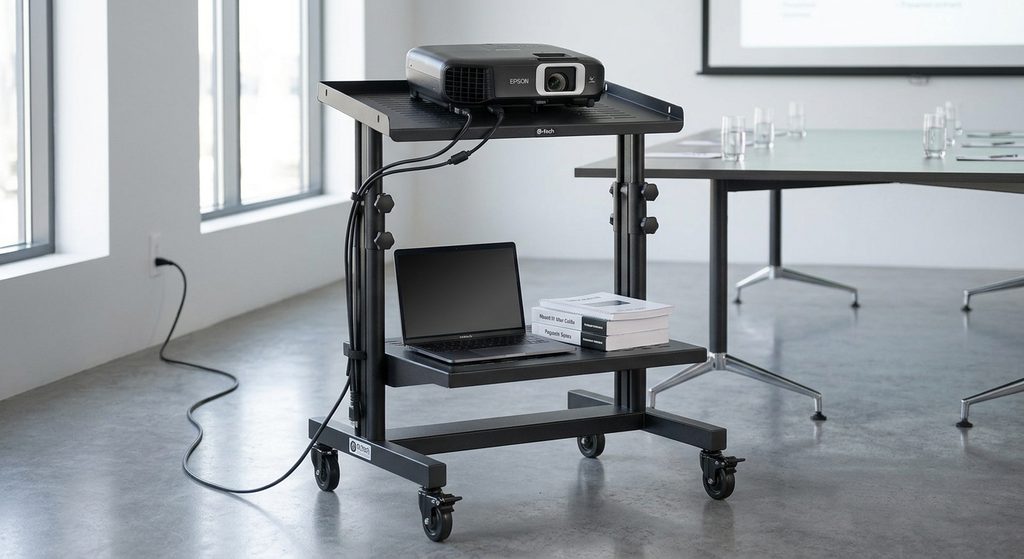
The B-Tech BT890 suits demanding presentation environments, supporting projectors up to 25 kg with adjustable height, tilt control, safety rails, and either wheeled or fixed-foot configurations for flexibility. btechavmounts.com
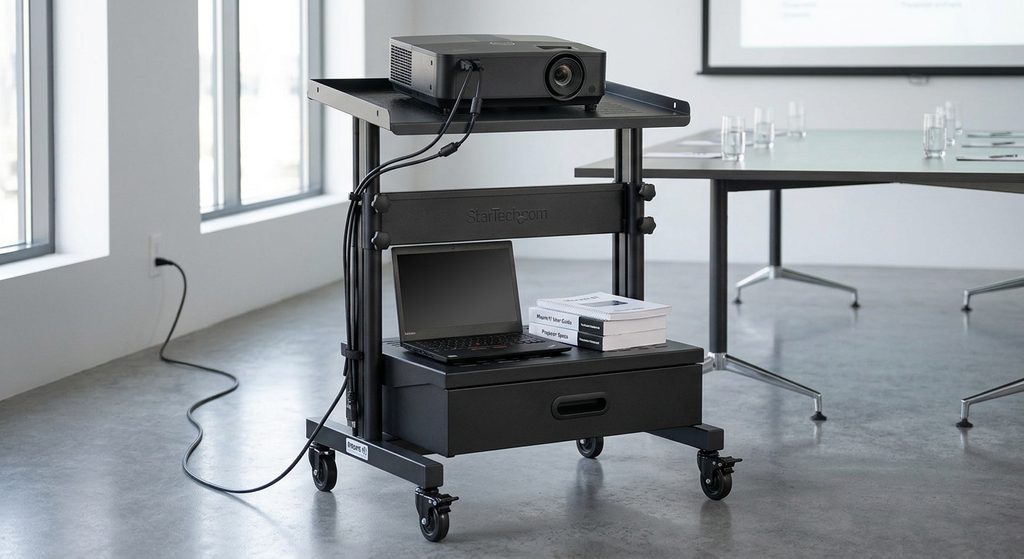
StarTech ADJPROJCART Projector Cart
The StarTech ADJPROJCART has two steel shelves rated at 10 kg each, adjustable top-tray height, ventilation, cable clips, and lockable casters for flexible classroom or office presentations. media.
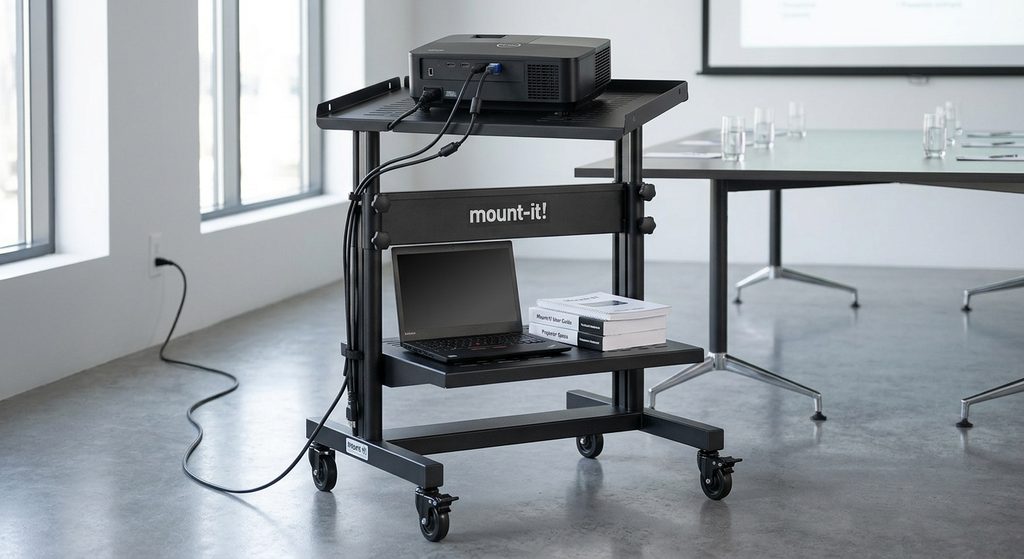
Mount-It! Heavy-Duty Projector Cart
The Mount-It! Heavy-Duty Projector Cart is worth comparing for larger equipment setups; its listed 88-pound capacity, dual shelves, adjustable height, and locking swivel casters support mobile use. laptopbee.com
Important: Always verify the latest manufacturer specifications, projector weight, shelf dimensions, and mounting compatibility before purchasing. These products have different load capacities and are not interchangeable.
What Makes a Projector Table Heavy Duty?
A heavy-duty projector table is distinguished by its ability to support heavier audiovisual equipment while maintaining stability during use. Unlike ordinary tables or lightweight projector stands, these models are constructed with stronger materials, reinforced frames, and durable support systems that reduce movement and improve equipment safety.
One of the most important characteristics is the construction material. Many heavy-duty projector tables feature steel or reinforced aluminum frames. These materials provide structural strength and durability, making them suitable for offices, classrooms, conference rooms, churches, and home theater installations.
Another important feature is the table’s weight capacity. Some projector stands are designed for small portable projectors, while heavy-duty models can accommodate larger projectors and additional presentation equipment. Always check the manufacturer’s maximum load rating before placing your equipment on the table.
Other characteristics that distinguish heavy-duty projector tables include:
- Reinforced construction: Strong frames and support brackets help prevent excessive movement.
- Wide base: Provides better balance and reduces the likelihood of tipping.
- Adjustable height: Allows users to position the projector at a suitable projection level.
- Non-slip surface: Helps keep equipment securely positioned.
- Locking wheels: Allow convenient movement while keeping the table stationary during presentations.
- Spacious platform: Provides room for projectors, laptops, and compatible accessories.
Additionally, some heavy-duty projector tables feature multiple shelves for storing laptops, remote controls, cables, and other presentation equipment.
Ultimately, the best heavy-duty projector table combines strength, stability, suitable weight capacity, and practical functionality. Choosing one that matches your projector’s dimensions and weight helps create a safer and more reliable projection setup.
Key Features to Look for in a Heavy-Duty Projector Table
Choosing the right heavy-duty projector table involves more than finding a stand that looks strong. You need a model with practical features that support your projector, provide reliable stability, and make everyday use convenient.
Here are the most important features to consider before purchasing.
Strong Construction Materials
Look for projector tables made from heavy-gauge steel, reinforced aluminum, or durable metal combinations. These materials offer structural support and are generally more suitable for demanding equipment setups than lightweight plastic stands.
High Weight Capacity
Weight capacity determines how much equipment the table can safely support. Check the manufacturer’s maximum load rating and ensure it accommodates your projector, laptop, and any other equipment placed on the same shelf.
Adjustable Height
An adjustable projector table allows you to position the projector at a suitable height for your screen. This feature is particularly useful in conference rooms, classrooms, and multipurpose spaces where projection requirements may change.
Stable Base and Locking Wheels
A wide, well-balanced base helps minimize unwanted movement. If you choose a mobile projector cart, look for locking wheels that keep it stationary during presentations.
Spacious Shelves and Cable Management
A sufficiently large platform provides room for your projector without crowding its ventilation openings. Additional shelves can accommodate laptops and accessories, while cable-management features help keep wires organized.
Portability and Easy Assembly
If you frequently move your equipment, consider a folding or wheeled design. However, portability should never compromise structural strength.
Buying tip: Prioritize weight capacity, stability, and platform dimensions before considering appearance or additional accessories. A projector table should safely accommodate your equipment under normal operating conditions.
What Size and Weight Capacity Do You Need for a Heavy-Duty Projector Table?
Selecting the correct size and weight capacity is essential when purchasing a projector table heavy duty model. A table that is too small may not provide enough room for your equipment, while one with insufficient weight capacity may become unstable or unsuitable for your projector.
The first step is to check your projector’s dimensions and weight. Look at the manufacturer’s specifications to determine the length, width, height, and total weight of the equipment. Your chosen table should have a platform large enough to accommodate the projector without allowing it to extend dangerously beyond the edges.
Understanding Projector Table Weight Capacity
Heavy-duty projector tables come with different load ratings depending on their construction and intended application. Some are designed for lightweight portable projectors, while others support heavier professional audiovisual equipment.
Consider the following when evaluating capacity:
- Projector weight: Check the actual weight of your projector.
- Additional equipment: Account for laptops and other items placed on the same shelf.
- Shelf capacity: Individual shelves may have different maximum load ratings.
- Weight distribution: Position equipment evenly to maintain stability.
- Manufacturer recommendations: Never exceed the specified load capacity.
Choosing the Right Table Dimensions
The ideal dimensions depend on your equipment and available installation space.
For example, a compact table may work well for a small home theater projector, while a wider platform may be more appropriate for professional presentation equipment.
Also, consider adjustable height. A table with sufficient height adjustment gives you greater flexibility when projecting onto screens positioned at different levels.
Finally, remember that maximum weight capacity alone does not guarantee stability. The base design, frame construction, locking mechanisms, and floor surface all influence how securely a projector table performs.
Choosing the correct dimensions and load rating helps protect your equipment and creates a more dependable projection setup.
Heavy-Duty Projector Table vs. Regular Projector Stand: What’s the Difference?
When shopping for projector support equipment, you may come across regular projector stands and heavy-duty projector tables. Although both serve the same basic purpose, they differ in construction, weight capacity, stability, and intended applications.
A heavy-duty projector table is generally designed for larger equipment, frequent use, and demanding presentation environments. A regular projector stand, on the other hand, is often intended for lightweight projectors and occasional use.
Here are the main differences to consider.
| Feature | Heavy-Duty Projector Table | Regular Projector Stand |
|---|---|---|
| Construction | Reinforced metal or steel | Lightweight metal or plastic |
| Weight capacity | Generally higher | Usually lower |
| Stability | Designed for heavier equipment | Depends on the design |
| Platform | Often wider and stronger | Often compact |
| Portability | May have wheels or folding features | Usually lightweight |
| Additional shelves | Common on projector carts | Less common |
| Applications | Offices, classrooms, events | Home and occasional use |
Which Option Should You Choose?
A heavy-duty projector table is a suitable choice if you operate a large projector, frequently organize presentations, or need additional space for laptops and audiovisual accessories.
For example, conference rooms, churches, educational institutions, and event venues can benefit from sturdy projector carts with adjustable shelves and locking wheels.
A regular projector stand may be sufficient for smaller home theater projectors, compact mini projectors, and occasional presentations. These stands are often easier to transport and require less storage space.
Ultimately, your choice should depend on the projector’s weight, dimensions, frequency of use, and installation requirements.
The bottom line: Choose a heavy-duty projector table when strength, stability, and equipment capacity are your priorities. Consider a regular projector stand when portability and simple everyday use matter more.
How to Set Up and Maintain a Heavy-Duty Projector Table
Proper setup and regular maintenance help ensure your heavy-duty projector table remains stable, functional, and suitable for supporting your audiovisual equipment. Even a well-constructed table requires correct assembly and positioning to perform reliably.
Follow these steps when setting up your projector table.
Step 1: Choose a Suitable Location
Place the table on a flat, stable surface. Avoid uneven floors, loose carpets, and areas where people frequently walk, as these conditions may increase the risk of accidental movement.
Step 2: Assemble the Table Correctly
Follow the manufacturer’s assembly instructions carefully. Tighten the supplied bolts, screws, and connecting brackets, and check that all support components are properly secured before placing equipment on the table.
Step 3: Position Your Projector
Place the projector centrally on the platform, ensuring that its feet sit securely on the surface. Leave enough space around ventilation openings to prevent overheating.
Step 4: Organize Cables and Accessories
Arrange power cables, HDMI connections, and other accessories neatly. Avoid allowing cables to hang where someone could accidentally pull the projector or move the table.
Step 5: Check Stability Before Use
If your table has wheels, engage the locking mechanisms. Confirm that the platform remains stable and that the projector is not positioned near the edges.
Essential Maintenance Tips
To keep your projector table in good condition:
- Clean the platform regularly to remove dust and dirt.
- Inspect screws, bolts, and brackets periodically.
- Check wheels and locking mechanisms for proper operation.
- Look for signs of corrosion, bending, or structural damage.
- Avoid exceeding the manufacturer’s recommended weight capacity.
- Store folding projector tables according to the manufacturer’s instructions.
Regular inspections and careful handling can extend the useful life of your projector table while helping protect your valuable projection equipment.
Conclusion: Choosing the Best Projector Table Heavy Duty
Choosing the right projector table heavy duty model is essential for creating a stable, reliable, and organized projection setup. Whether you need one for a home theater, classroom, office, church, or professional presentation environment, prioritize strong construction, sufficient weight capacity, a spacious platform, and adjustable height.
Consider additional features such as locking wheels, multiple shelves, and cable-management options to improve convenience and functionality. Most importantly, check your projector’s dimensions and weight before purchasing to ensure compatibility.
A well-designed heavy-duty projector table protects your equipment while making presentations and entertainment setups easier to manage. Invest in a sturdy model that meets your current requirements and provides dependable support for everyday use.
Frequently Asked Questions About Projector Table Heavy Duty
What is a heavy-duty projector table?
A heavy-duty projector table is a reinforced platform or stand designed to support projectors and related audiovisual equipment. It typically features strong metal construction, a stable base, and a higher weight capacity than lightweight projector stands.
How much weight can a heavy-duty projector table hold?
Weight capacity varies depending on the manufacturer, materials, and design. Some models support relatively lightweight equipment, while professional projector carts can accommodate considerably heavier devices. Always check the manufacturer’s specified load rating before purchasing.
Are heavy-duty projector tables adjustable?
Yes. Many heavy-duty projector tables feature adjustable-height platforms that allow users to position projectors at different levels. Some models also offer adjustable shelves, tilting surfaces, and other positioning features.
Can I use a heavy-duty projector table for a laptop?
Yes. Many projector tables and mobile carts include additional shelves for laptops, media players, and presentation accessories. However, check the individual shelf weight limits and dimensions before placing additional equipment on them.
Is a projector cart better than a regular projector table?
A projector cart can be more convenient when you frequently move equipment between rooms. Models with locking wheels and multiple shelves provide additional flexibility. However, a stationary projector table may be preferable for permanent setups.
What material is best for a heavy-duty projector table?
Steel is a popular choice because of its strength and durability. Reinforced aluminum is another option, particularly when portability matters. The best material depends on the required weight capacity and intended application.
Can a heavy-duty projector table be used for home theaters?
Absolutely. A sturdy projector table can support compatible home theater projectors and provide space for accessories. Choose a model with suitable dimensions, adequate ventilation clearance, and enough weight capacity for your equipment.
This website is a participant in the Amazon Services LLC Associates Program, an affiliate advertising program designed to provide a means for us to earn fees by linking to Amazon.com and affiliated sites.